Discover why pairing an Air Source Heat Pump (ASHP) with solar PV isn’t always the perfect match – and why battery storage and smart electricity tariffs are becoming the real solution for reducing heating costs.
Air source heat pumps and solar PV: a great idea… or is it?
For years, homeowners have been encouraged to install solar PV alongside an Air Source Heat Pump (ASHP) as the ultimate renewable energy combination.
Both technologies are fantastic in their own right.
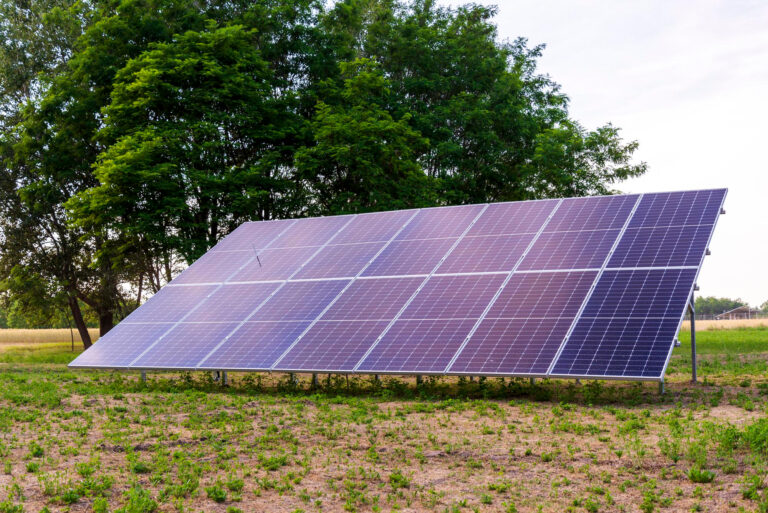
Solar panels generate clean, renewable electricity.
Air source heat pumps provide highly efficient heating by extracting heat from the outside air.
But here’s the problem that isn’t discussed often enough:
They need electricity at completely different times of the year.
At Bright Spark Energy, we believe in designing systems that perform in the real world – not just on paper.
The seasonal mismatch
Solar PV systems perform best when:
- Days are long
- The sun is high in the sky
- Weather is clear
- Temperatures are relatively cool
Heat pumps perform hardest when:
- Days are shortest
- Solar generation is lowest
- Heating demand is highest
- Electricity prices are often at their peak
Unfortunately, these two technologies don’t naturally complement one another.
Solar generation throughout the year
An average 8kWp solar PV system may produce approximately:
| Month | Daily generation |
|---|---|
| June | 35–50 kWh |
| July | 30–45 kWh |
| August | 25–40 kWh |
| December | 2–8 kWh |
| January | 3–10 kWh |
Now compare that to the electricity demand of a heat pump.
A well-insulated family home can easily require:
- 25–40 kWh per day
- 50–70 kWh during particularly cold weather
It’s easy to see why winter solar generation alone rarely powers a heat pump.
Heating happens when solar doesn’t
Most homes require heating:
- Early morning
- Evening
- Overnight
Unfortunately…
These are the exact periods when solar generation is:
- Very low
- Or completely zero
Even on bright winter days, the majority of your heating demand occurs before and after meaningful solar production.
Why bigger solar systems aren’t always the answer
Many homeowners assume:
“I’ll simply install more solar panels.”
Whilst increasing array size certainly helps annual generation, winter performance remains limited.
A 12kWp system still experiences:
- Short daylight hours
- Low sun angles
- Frequent cloud cover
Generating significantly more energy during December and January is surprisingly difficult.
Roof space isn’t usually the limiting factor.
The weather is.
Solar PV still makes excellent financial sense
This isn’t an argument against solar.
Far from it.
Solar panels continue to provide exceptional value by powering:
- Household appliances
- Hot water systems
- Electric vehicles
- Home offices
- Air conditioning
- Battery storage
They dramatically reduce annual electricity consumption.
They’re simply not designed to carry the majority of winter heating demand.
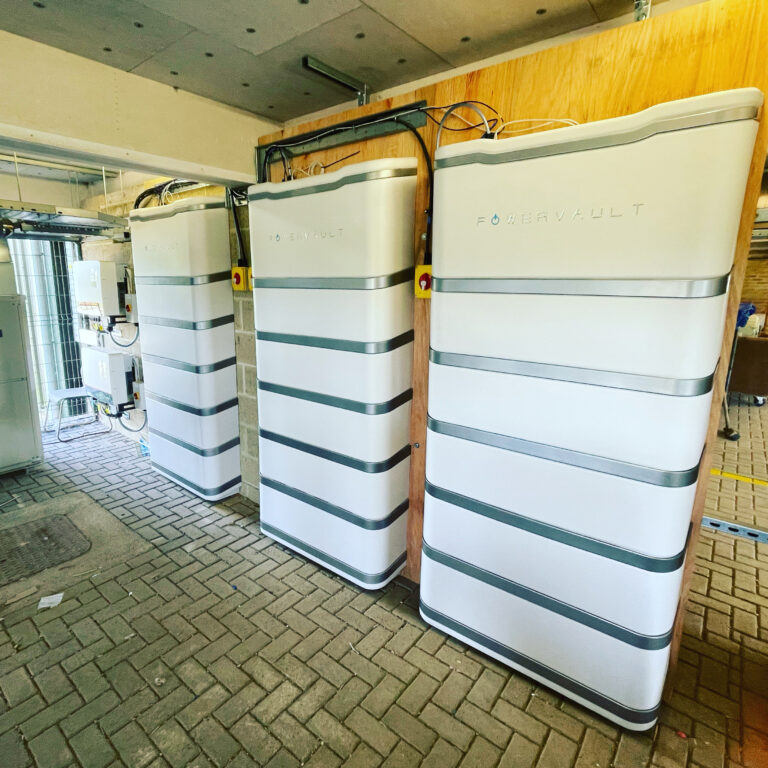
Battery storage is the missing piece
Modern battery storage completely changes the conversation.
Instead of relying solely on winter sunshine, batteries allow you to store cheap overnight electricity.
Rather than asking:
“Can my solar run my heat pump?”
The better question becomes:
“Can my battery buy electricity when it’s cheapest?”
Increasingly, the answer is yes.
Smart tariffs are changing everything
Electricity suppliers now offer smart tariffs where overnight electricity can cost significantly less than daytime rates.
Instead of paying peak prices during the day, your battery can automatically charge overnight.
The stored electricity can then power:
- Your heat pump
- Lighting
- Kitchen appliances
- Home office
- Household loads
This approach often delivers a larger financial saving than relying on limited winter solar generation alone.
Intelligent home energy systems
Modern battery platforms from manufacturers such as:
- Sigenergy
- Tesla Powerwall 3
- SolarEdge Home Battery
don’t simply store electricity.
They actively manage your home’s energy.
They can intelligently decide whether to:
- Charge from solar
- Charge from off-peak electricity
- Power the house
- Supply the heat pump
- Charge your electric vehicle
- Export electricity when financially beneficial
They’re becoming complete home energy management systems.
Summer and winter: two very different strategies
Summer
Solar panels power:
- Air conditioning
- Household appliances
- Hot water
- EV charging
Excess generation charges the battery.
Grid imports become minimal.
Winter
The battery charges overnight using low-cost electricity.
Stored energy powers:
- The heat pump
- Lighting
- Appliances
- Home office
- General household demand
Solar generation becomes an additional bonus rather than the primary energy source.
Whole home backup
Battery storage also delivers another major benefit.
Systems such as:
- Sigenergy Backup Gateway
- Tesla Backup Gateway
can provide whole-home backup during a power cut.
Depending on battery size and system design, your home can continue powering:
- Heating controls
- Refrigeration
- Broadband
- Lighting
- Security systems
- Medical equipment
- Smart home technology
Energy resilience is becoming increasingly valuable.
Every home is different
The ideal renewable energy solution depends upon:
- Property insulation
- Heat loss
- Radiator sizing
- Underfloor heating
- Occupancy
- Electricity usage
- EV charging
- Future expansion
- Smart tariff availability
That’s why professional system design is so important.
The Bright Spark Energy approach
We don’t simply install products.
We design complete renewable energy systems.
Every proposal considers:
- Annual electricity consumption
- Seasonal heating demand
- Solar generation profile
- Battery storage capacity
- Heat pump performance
- Future electric vehicles
- Smart tariffs
- Whole-home backup
- Return on investment
The result is a system that performs throughout the entire year – not just during summer.
Frequently asked questions
Can solar PV power an air source heat pump?
Yes – but mainly during brighter months. During winter, solar generation is much lower, so it generally provides only a proportion of the electricity required.
Is solar PV still worth installing with a heat pump?
Absolutely.
Solar reduces your annual electricity consumption, supports battery charging and powers your home throughout the year.
Is battery storage worth it with a heat pump?
For many homes, yes.
Battery storage allows you to purchase cheaper overnight electricity and use it during the day when your heat pump is operating.
What’s the best battery system?
Leading systems include:
- Sigenergy SigenStor
- Tesla Powerwall 3
- SolarEdge Home Battery
The best solution depends on your home’s electricity demand, heating requirements and future plans.
Should I install more solar panels instead?
Possibly – but once you’ve maximised suitable roof space, battery storage and smart tariffs often deliver greater financial benefits than simply increasing panel numbers.
Conclusion
Air source heat pumps and solar PV are both outstanding renewable technologies.
However, they don’t naturally work together during the period when heating demand is highest.
The real opportunity lies in combining:
- Solar PV
- Battery storage
- Smart electricity tariffs
- Intelligent energy management
- Whole home backup
Together, these technologies create a home that’s cheaper to run, more resilient during power cuts and far less dependent on expensive peak-rate electricity.
At Bright Spark Energy, we design renewable energy systems that work in the real world – not just in marketing brochures.
Whether you’re considering solar PV, battery storage, air source heat pumps or whole home backup, we’ll design a bespoke solution that delivers genuine long-term savings. Get in touch to start the conversation.
Why choose Bright Spark Energy?
- Independent renewable energy specialists
- MCS Certified solar PV installers
- Tesla Powerwall Certified Installers
- Sigenergy Approved Installers
- SolarEdge Accredited Installers
- Whole home backup specialists
- Domestic, commercial and listed building expertise
- Serving Sussex, Hampshire, Surrey, Kent and the South East