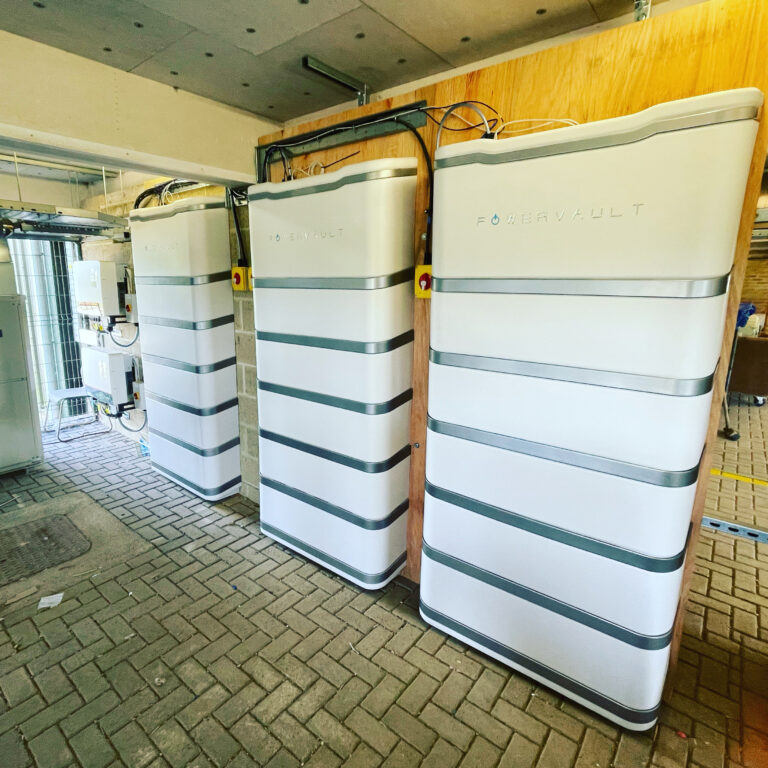
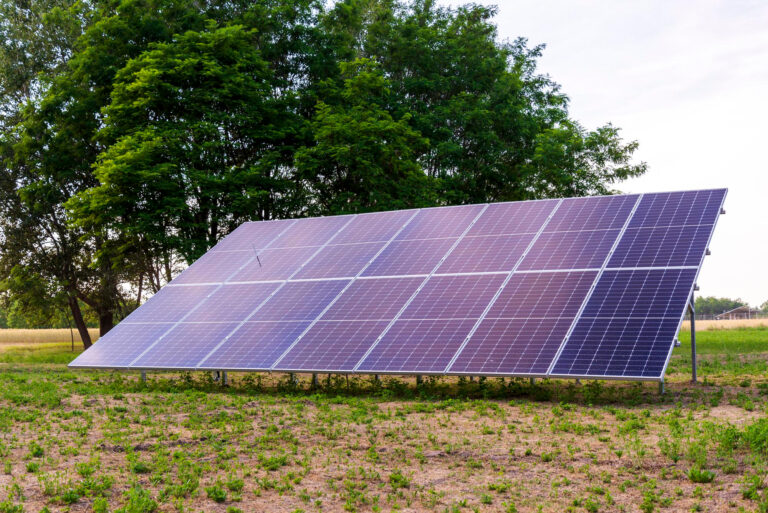
Why bigger isn’t always better – and how to choose the battery that delivers the greatest value.
One of the first questions we are asked by homeowners considering solar and battery storage is:
“What size battery do I need?”
It’s a great question, but the answer isn’t as simple as choosing the biggest battery your budget allows.
A battery that’s too small may run out of energy before the end of the evening, forcing you to buy electricity from the grid. A battery that’s too large may never be fully utilised, increasing the cost of the system without delivering a meaningful improvement in savings.
The best battery is one that’s designed around how your home actually uses energy.
At Bright Spark Energy, we don’t sell “standard” battery packages. Every system is modelled using your electricity consumption, predicted solar generation, energy tariff and future plans to ensure you receive the best long-term return on your investment.
Step 1 – Understand how much electricity your home uses
The starting point is your annual electricity consumption, which can usually be found on your electricity bill.
As a rough guide:
| Annual usage | Average daily usage |
|---|---|
| 3,650kWh | 10kWh per day |
| 5,475kWh | 15kWh per day |
| 7,300kWh | 20kWh per day |
| 10,950kWh | 30kWh per day |
However, annual usage only tells part of the story.
Two homes may each use 5,000kWh per year but require completely different battery sizes because they use electricity at different times.
A family that’s home all day will use much of its electricity while the sun is shining.
Another household may be empty until 6pm and use most of its electricity after sunset.
That’s why we always look beyond annual consumption.
Step 2 – Focus on your evening electricity usage
Solar panels generate most of their electricity during the day.
Your battery is there to power your home when the sun has gone down.
That means the most important figure is often how much electricity you use between late afternoon and the following morning.
This includes:
- Lighting
- Cooking
- Television
- Refrigeration
- Home offices
- Washing machines
- Dishwashers
- Internet equipment
- Electric showers
- Heat pumps
- General household loads
If your evening consumption averages around 8kWh, installing a 20kWh battery may not provide the best financial return.
Likewise, if your family regularly uses 15kWh overnight, a 5kWh battery is unlikely to meet your expectations.
Step 3 – Can your solar panels charge the battery?
A battery can only store electricity that’s available.
If your solar panels typically export 8kWh of surplus electricity on a sunny day, installing an 8–10kWh battery may allow you to capture most of that energy.
However, if your system only exports 2–3kWh each day, a much larger battery may spend much of its life partially empty.
This is why battery sizing should always be considered alongside the solar array.
A larger battery doesn’t automatically produce greater savings.
Step 4 – Don’t forget winter
One of the biggest misconceptions is that batteries only work well in summer.
While it’s true that solar generation reduces during winter, today’s smart electricity tariffs have transformed the way batteries operate.
Many homeowners now charge their batteries overnight using lower-cost electricity before using that stored energy throughout the following day.
This means your battery can save money throughout the year – not just when the sun is shining.
Battery capacity vs battery power
These two figures are often confused.
Battery capacity (kWh)
This tells you how much energy the battery can store.
Think of it as the size of the fuel tank.
Battery power (kW)
This tells you how quickly the battery can deliver electricity.
Think of it as the size of the engine.
For example, your home might switch on:
- The kettle
- Electric oven
- Dishwasher
- Heat pump
- Washing machine
All at the same time.
The battery must be capable of supplying that level of demand.
When designing a backup system, battery power is often just as important as battery capacity.
Not all batteries are the same
Modern battery technology has advanced rapidly over the last few years.
While most batteries perform the same basic function, the way they achieve it can be very different.
At Bright Spark Energy we primarily install two premium battery platforms, each suited to different types of property and customer requirements.
Sigenergy – designed to grow with your home
One of the biggest advantages of the Sigenergy SigenStor platform is its modular design.
Instead of replacing your battery when your energy needs increase, additional battery modules can simply be added.
Perhaps today you need around 16kWh of storage.
In a few years you might purchase an electric vehicle, install air conditioning, add a heat pump or extend your home.
Rather than replacing the system, you can simply increase the battery capacity to suit your changing lifestyle.
This makes Sigenergy an excellent choice for homeowners looking to future-proof their investment.
The platform also integrates exceptionally well with:
- Whole-home backup
- AC and DC EV charging
- Smart energy management
- Heat pumps
- Dynamic electricity tariffs
- Future battery expansion
It offers enormous flexibility without requiring you to predict exactly how your home will use energy ten years from now.
Tesla Powerwall 3 – simple, powerful and proven
The Tesla Powerwall 3 takes a different approach.
Each Powerwall combines a high-capacity battery with an integrated hybrid inverter, delivering approximately 13.5kWh of usable storage and excellent continuous power output from a single unit.
For many family homes, one Powerwall provides an ideal balance between capacity, performance and simplicity.
Where additional storage is required, further Powerwall units can be added to increase capacity.
Tesla remains one of the most recognised names in residential battery storage and is particularly popular with homeowners looking for:
- A premium all-in-one solution
- Excellent monitoring via the Tesla App
- High power output
- Reliable whole-home backup
- Seamless integration with solar PV
Should you install the biggest battery you can afford?
Not always.
One question we often ask customers is:
“How will your home use energy five years from now?”
Perhaps you’ll buy an electric vehicle.
Maybe you’ll install a heat pump.
Perhaps you’ll build a garden office or convert the loft.
If those changes are likely, installing a system that can grow with your home may be a better investment than simply installing the biggest battery today.
The objective isn’t to maximise battery capacity.
It’s to maximise value.
A typical example
Imagine a family home with:
- Annual electricity usage of 5,000kWh
- Average daily consumption of approximately 14kWh
- Around 8kWh used after sunset
- A solar system producing sufficient surplus energy to charge the battery most days between spring and autumn
In this case, a battery providing around 9–13kWh of usable storage may provide an excellent balance between performance and return on investment.
If the household later purchases an electric vehicle or installs a heat pump, additional storage could be added where appropriate.
The best data comes from your smart meter
One of the biggest advances in battery design is access to half-hourly electricity data.
Rather than guessing your usage, we can often analyse exactly:
- When you use electricity
- How much you use overnight
- How much surplus solar is available
- How much energy is exported
- Which tariff you’re on
- How different battery sizes perform financially
This allows us to compare several battery options before recommending the one that delivers the greatest long-term value.
There is no “perfect” battery size
Every homeowner has different priorities.
Some want the fastest financial payback.
Others want maximum energy independence.
Some want to protect themselves against power cuts.
Others simply want to reduce electricity bills.
The right battery depends on what matters most to you.
That’s why battery design should never be based solely on annual electricity consumption or the number of solar panels on your roof.
Our approach
At Bright Spark Energy, we believe every battery should be designed around the customer – not around a sales target.
We model your electricity consumption, analyse your solar generation, review your tariff, discuss your future plans and recommend a solution that genuinely suits your home.
Sometimes that’s a single Tesla Powerwall 3.
Sometimes it’s a Sigenergy SigenStor system that can grow as your energy needs evolve.
Sometimes the answer is a smaller battery that delivers a faster return on investment.
Our role isn’t to sell you the biggest battery.
It’s to help you choose the right battery.
Because the best energy storage system isn’t necessarily the largest one on the market – it’s the one that works hardest for your home, every single day. If you’d like us to model yours, get in touch.