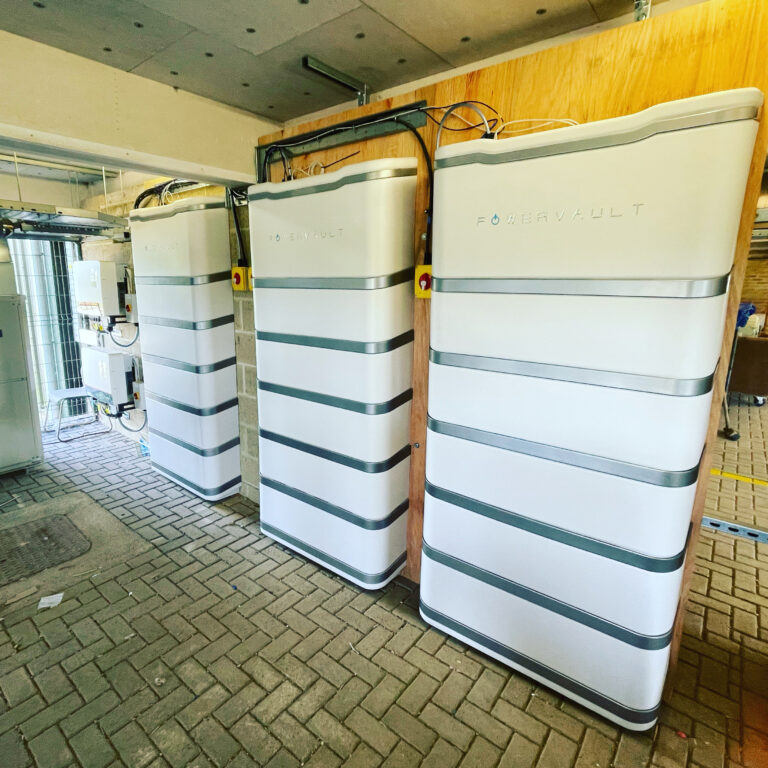
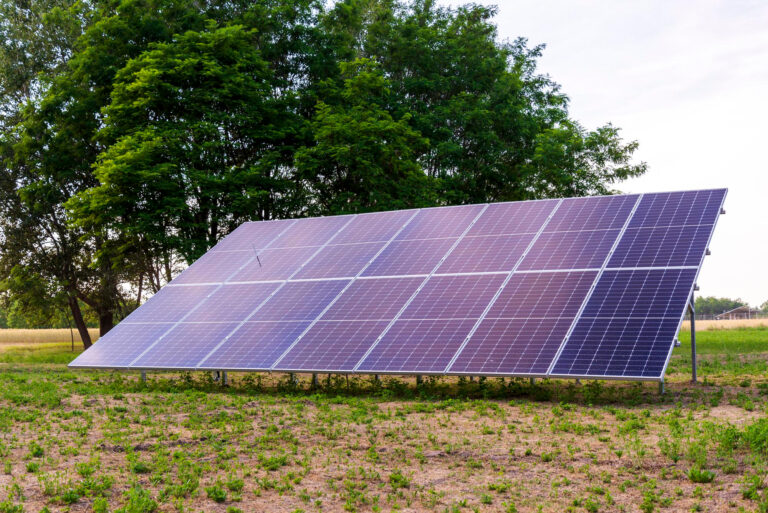
If you’ve searched for battery storage installers near me, you’ve probably discovered that prices, battery sizes and promises vary enormously.
One installer might recommend a relatively small battery for £4,000–£5,000, while another proposes a much larger system costing several times that amount. Both quotes can appear to offer broadly the same thing: a battery that stores electricity and reduces what you buy from the grid.
But they may be completely different systems.
At Bright Spark Energy, we’ve been installing renewable energy systems since 2011. Our advice is not to start by asking which battery is best or simply looking for the cheapest price.
Start by asking what you actually want the battery to do – and who you’re trusting to install and support it for the next 10–15 years.
Start with what you want the battery to do
A good home battery storage installer should establish this before recommending equipment.
Are you mainly trying to store excess solar? Do you want to charge cheaply overnight and use that electricity during expensive periods? Are you looking for backup during power cuts? Do you have an EV or heat pump? Or do you want a complete home power management system controlling solar, batteries, EV charging and other household loads together?
These requirements can lead to very different designs.
A solar powered house battery installed simply to capture excess daytime solar might not need the same capacity or power output as a battery expected to support a large house through a power cut.
That is why we’re cautious about standard battery packages being sold online based purely on battery size and price.
The battery needs to be designed around the house.
Battery storage installers near me: why going local matters
We’d strongly recommend looking at established local companies rather than automatically choosing the biggest national name or cheapest online quote.
We’re obviously slightly biased – Bright Spark Energy is a family-run business – but there’s a practical reason for it.
With a good smaller local installer, your installation matters to them.
You’re not simply another number on next week’s installation schedule.
Local companies build their reputation through recommendations, repeat business and customers talking to their friends and neighbours. If something goes wrong, it’s our local reputation on the line.
That creates accountability.
You also want to know who you’re going to call if you need help. You don’t want to spend hours going through a national call centre explaining your battery system to someone who has never seen your house.
Battery storage isn’t necessarily a fit-and-forget product either.
Over the next 10 years you might change electricity tariff, buy an EV, install a heat pump, add more solar panels or increase your battery capacity.
Having a local installer who knows your property and your system can be extremely valuable.
Across Sussex, Surrey and Hampshire, we work on everything from modern houses to listed properties, farms and large country homes. Local experience helps because every property – and every electricity supply – is slightly different.
Choose a good installer – but choose a good brand too
The installer is important, but so is the equipment they’re putting into your home.
Battery prices have fallen significantly and there are now a huge number of manufacturers competing in the UK market.
We wouldn’t recommend choosing purely on price.
A battery could be attached to your house for 10, 15 or potentially 20 years. We therefore prefer established manufacturers with good technical support, strong warranties and a realistic prospect of still supporting their equipment years into the future.
Ask what the warranty actually covers.
Is it 10 years? Is there an energy throughput limit? What battery capacity is guaranteed at the end of the warranty? Is there UK technical support? If something fails, who deals with the manufacturer? And does your installer have an established relationship with that manufacturer?
Bright Spark Energy works with established manufacturers including Tesla, SolarEdge, Sigenergy and Enphase.
Different products suit different properties. We don’t believe there is one battery that is automatically the best choice for every home.
What matters is selecting good-quality equipment from a manufacturer we are confident supporting, and then designing it correctly for the property.
The cheapest battery isn’t necessarily the cheapest option over 10 or 15 years.
Don’t just compare battery capacity
One of the most common comparisons we see is price per kWh of battery storage.
It’s useful, but it doesn’t tell the whole story.
Imagine two 10 kWh batteries. One can deliver 3.6 kW and the other can deliver 10 kW.
They store roughly the same amount of energy, but their ability to power your house can be completely different.
Think about what happens at 6pm when someone is cooking, the dishwasher is running, the kettle goes on and perhaps a heat pump is operating.
We therefore look at both kWh, which tells us how much energy the battery stores, and kW, which tells us how quickly it can deliver that energy.
A good solar battery storage installer for homes should also look at when you actually use electricity rather than simply taking your annual consumption and selecting a battery from a brochure.
Backup power needs proper designing
This is probably one of the biggest areas of misunderstanding around battery storage.
Having a battery does not automatically mean your house will continue operating during a power cut.
A proper residential battery backup system needs equipment capable of safely disconnecting your property from the electricity network and creating a supply for the house while the grid is unavailable.
The electrical design behind this is just as important as the battery itself.
Does the system back up the entire property or just selected circuits? What is the maximum backup output? What happens when a large appliance starts? How is the property earthed during an outage? Can your solar panels continue generating while the grid is down?
These are questions we’d actually like customers to ask us.
Systems such as Tesla Powerwall backup power, SolarEdge battery backup and Sigenergy can provide sophisticated backup arrangements when correctly designed, but their capabilities and installation requirements differ.
The logo on the battery is only one part of the system.
Size the battery around your house – not a brochure
We normally start with electricity consumption data.
Ideally, we want to understand not just how much electricity you use annually, but when you use it.
If you consume 6,000 kWh per year, that doesn’t automatically tell us whether you need a 5, 10 or 20 kWh battery.
Your solar generation, overnight consumption, EV charging, heat pump, electricity tariff and future plans all matter.
This is particularly important with battery storage for a new build house, where historical electricity bills don’t exist.
For new builds, we can consider the expected electrical loads and design the solar, battery storage, EV charging and heating together rather than adding each technology independently afterwards.
Can a battery actually save you money?
Usually, yes – but we don’t think batteries should be sold using unrealistic savings calculations.
A battery can store excess solar instead of exporting it. It can also charge from the grid when electricity is cheap and discharge when electricity is expensive.
Increasingly, the clever bit isn’t simply the battery – it’s how it’s controlled.
Modern tariffs can have large differences between cheap and expensive electricity periods. Export tariffs can also mean that exporting solar at certain times makes more financial sense than storing it.
Good battery design is therefore becoming energy management, rather than simply maximising solar self-consumption.
A well-designed system should consider how your solar, battery, grid tariff, EV and other major loads can work together.
What about finance?
Battery storage is still a significant investment, even though equipment prices have fallen considerably.
There are various solar battery storage finance options available, and spreading the cost can make sense for some households.
But finance should be included honestly in the calculation.
Look at the total amount repayable, not just the monthly figure, and compare that with realistic expected energy savings.
If somebody tells you that the battery will “pay for itself” through savings, ask them to show you the assumptions behind that calculation.
Questions we’d want you to ask us
If you’re comparing battery installers, we’d suggest asking every company quoting for your home:
- Why have you recommended this particular battery?
- Why have you recommended this battery capacity?
- What is its maximum charge and discharge power?
- Is the manufacturer established and does it have good UK support?
- What exactly does the battery warranty cover?
- Who handles a warranty claim if something fails?
- Will my solar continue operating during a power cut?
- Is backup whole-house or selected circuits?
- What happens if my electricity consumption increases?
- How will the system work with an EV or heat pump?
- Can it automatically take advantage of cheaper electricity tariffs?
- What electrical alterations are included?
- Who completes the DNO application?
- Will I receive electrical certification?
- Is the installation MCS certified?
- What isn’t included in the quoted price?
- What assumptions have been used to calculate my savings?
- And most importantly: who do I call if something goes wrong in five years?
A competent installer shouldn’t be uncomfortable answering any of them.
Choosing the right battery installer
If you’re searching for battery storage installers near me, our advice is fairly straightforward.
Go local where you can. Choose a company with a track record. Choose good-quality equipment from an established manufacturer. And make sure the system has been designed around your home rather than around what happens to be cheapest that month.
Check the installer’s MCS certification and electrical accreditations. Look at how long they’ve been trading. Read genuine customer reviews. Ask about their relationship with the battery manufacturer and, importantly, what aftercare looks like once you’ve paid the final invoice.
Bright Spark Energy has been installing renewable energy systems since 2011. We’re still a family-run business, and although we’ve grown considerably since those early days, we’ve deliberately tried to retain the personal approach of a smaller local company.
We want to install systems we’re comfortable putting our name against, using good-quality equipment with strong warranties and manufacturer support.
Because ultimately, the best battery isn’t necessarily the biggest, the newest or the cheapest.
It’s the one that’s properly designed for your home, installed properly, supported properly – and still doing the job you bought it to do years down the line. If you’d like to put those questions to us, get in touch.