Yes, solar panels can be installed on some listed buildings in England. You’ll generally need listed building consent for panels fitted to the building itself, and you may also need planning permission. The decision depends on how the installation would affect the building’s historic character, fabric and setting. A less prominent roof or a suitable location elsewhere on the property may make solar viable. You can check with Historic England for guidance on consent for solar PV here.
Do You Need Planning Permission for Solar Panels on a Listed Building?
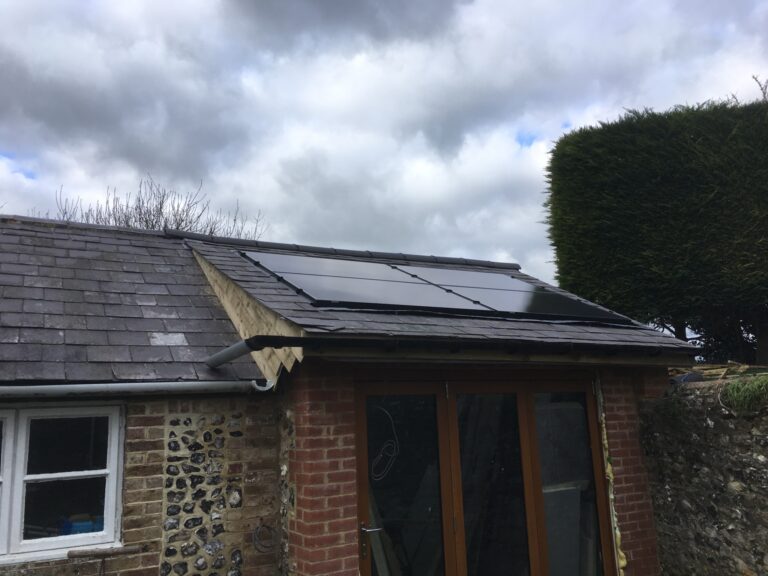
Listed building consent and planning permission are separate. If you want to put panels on a listed house, including a Grade II listed home, speak to your local planning authority early about both applications. The usual householder rooftop solar permitted development rights do not cover a listed dwelling or buildings within its curtilage. A rear roof can reduce the visual impact, but it still forms part of the listed building.
If you manage a listed place of worship covered by ecclesiastical exemption, approval goes through the relevant denominational authority. Ask about planning permission separately.
Where Can Solar Panels Go on a Historic Property?
A prominent roof with original tiles or slates can be particularly sensitive. At Bright Spark Energy, we start by looking at where the panels could generate useful electricity while minimising changes to the building and its setting.
- Rear or inward-facing roof slopes may reduce visibility from important viewpoints.
- Later extensions or outbuildings may offer a suitable roof, depending on their age, location and heritage status.
- A ground-mounted array can keep panels off the historic roof, where there’s a suitable location with enough sun and a workable cable route.
An outbuilding may be protected by the listing, and a ground-mounted array can still affect the setting. Check the permissions for the specific location with your local planning authority before settling on a design.
What Makes a Solar Proposal Suitable for a Listed Building?
Panel placement is only part of the design. How the panels are fixed, where cables run and where the inverter sits can all affect historic fabric. A good survey also considers the condition of the roof, its ability to carry the system and how the equipment could eventually be removed.
Photos from key viewpoints, a proposed panel layout and details of the fixings and cable route can help a conservation officer understand the impact. Explain why the location was chosen and what other options you considered. If a smaller array on a less prominent roof looks more suitable, compare its expected generation with the building’s electricity use before deciding whether to proceed.
What If Your House is in a Conservation Area?
A conservation area designation and a building listing are separate. An unlisted home in a conservation area can still be subject to restrictions on visible solar installations, and local directions can affect permitted development rights. A property can also be both listed and in a conservation area. Check your address and proposed panel location with your council before ordering equipment.
Explore Solar PV for Your Listed Building
If you’re considering solar for a listed home or a historic commercial or public building, send us the property address and any photos you have of the roof and potential alternatives. Bright Spark Energy can assess likely generation, talk you through the practical installation options and provide a layout you can discuss with your conservation officer.