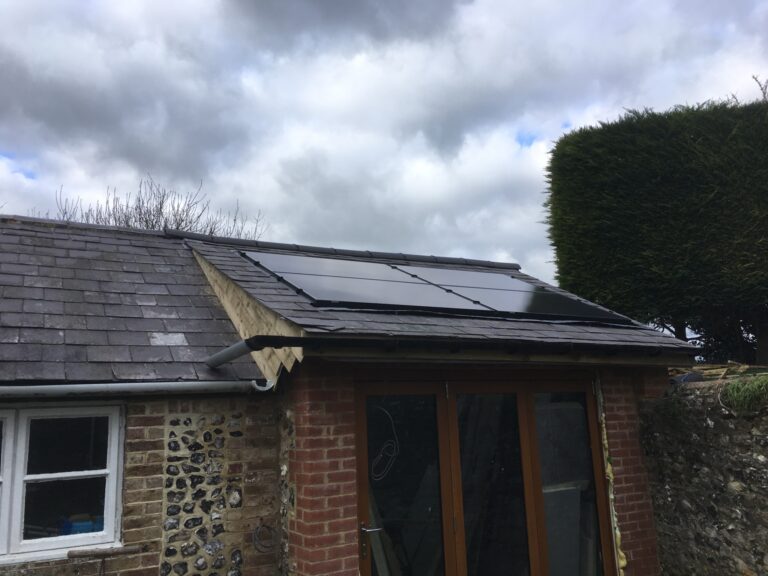
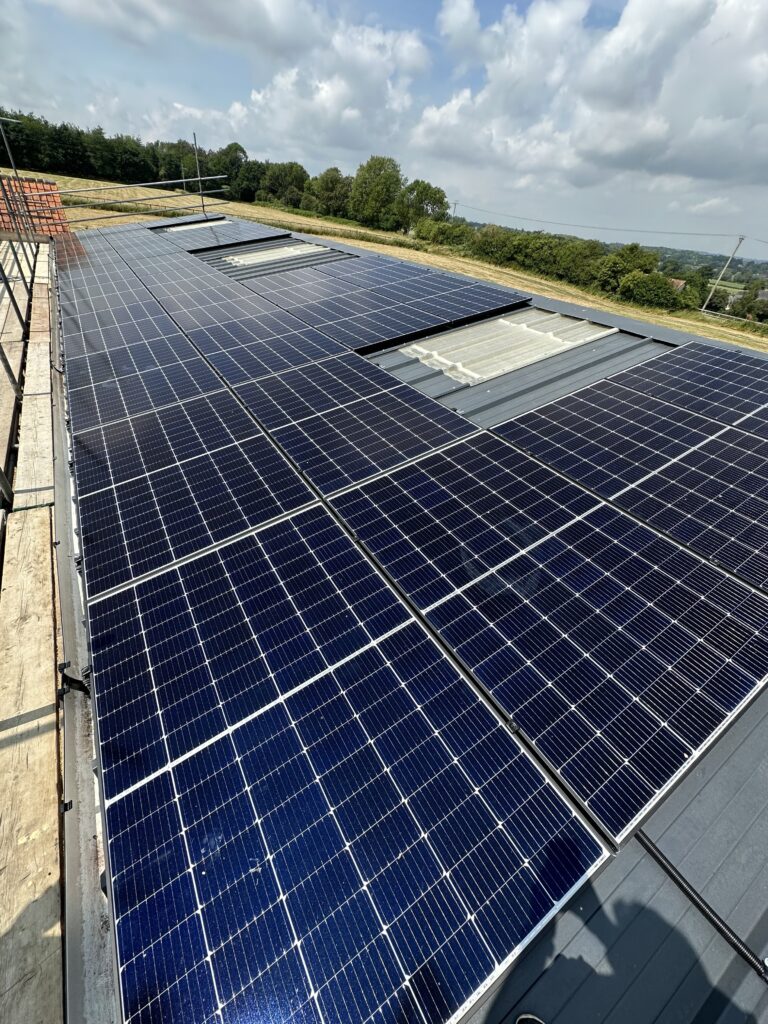
Why the best solar system isn’t always the biggest one.
One of the most common questions we’re asked is:
“How many solar panels should I install?”
Closely followed by:
“Should I just fill every available part of my roof?”
It’s an understandable question. If solar panels save money, surely installing more panels means saving even more?
Not necessarily.
While every additional panel will generate electricity, there comes a point where adding more panels delivers diminishing financial returns. The secret isn’t installing the maximum number of panels your roof can hold – it’s designing a system that matches your home’s energy needs, lifestyle and future plans.
At Bright Spark Energy, we believe the best solar system is the one that delivers the greatest long-term value, not simply the highest generation figure.
Start with your electricity usage – not your roof space
The first question shouldn’t be:
“How many panels can I fit?”
It should be:
“How much electricity does my home actually use?”
Every household is different.
A retired couple may use around 3,000kWh of electricity each year.
A family with children, electric vehicles and a heat pump could easily use 10,000–15,000kWh or more.
Your solar system should be designed around your energy consumption – not simply around the size of your roof.
Bigger isn’t always better
The first solar panels you install usually provide the greatest financial benefit because they replace electricity that you would otherwise buy from the grid.
As your system gets larger, something changes.
Once your home is using all the electricity it needs and your battery is fully charged, any additional solar generation is exported to the grid.
While exporting electricity is certainly better than wasting it, those exported units are generally worth considerably less than the electricity you would have paid to import.
This is where the law of diminishing returns begins.
Each additional panel still generates electricity – but not necessarily additional value.
Don’t rely on the Smart Export Guarantee (SEG)
Many homeowners assume that any surplus electricity they generate can simply be sold back to the grid for years to come.
While this is often possible through the Smart Export Guarantee (SEG), it’s important to understand that export payments are not guaranteed for the lifetime of your solar system.
Unlike the original Feed-in Tariff (FIT), the Smart Export Guarantee is not a government-backed subsidy. It is a commercial arrangement offered by electricity suppliers, and those suppliers can change export tariffs, alter their terms or withdraw products altogether.
No one knows what export rates will look like in five, ten or twenty years’ time.
For that reason, we never recommend sizing a solar system based on future export income alone.
Instead, the goal should be to maximise self-consumption – using as much of the electricity you generate within your own home as possible.
Every unit of solar electricity you use yourself is one you don’t have to buy from the grid, and that saving is usually worth significantly more than exporting it.
When considering additional panels, it’s worth asking one simple question:
“If export payments reduced significantly in the future, would these extra panels still make financial sense?”
If the answer is yes, then the system is likely to remain a good investment regardless of future tariff changes.
Understanding self-consumption
One of the most important measurements in any solar system is self-consumption.
This simply means the percentage of the electricity your solar panels generate that you actually use within your home.
Typical figures are:
- Without battery storage: around 25–40%
- With battery storage: often 70–90%
- With batteries, EV charging and smart tariffs: potentially even higher
The higher your self-consumption, the greater your savings.
That’s why solar panels and battery storage should always be considered together.
At what point do you have too many panels?
There isn’t a magic number.
Instead, there comes a point where each additional panel contributes less financial benefit than the previous one.
You may be approaching that point if:
- Your battery is fully charged before lunchtime for much of the year.
- Most additional generation is exported.
- Your annual generation greatly exceeds your annual electricity consumption.
- You have no plans to increase your electricity usage in the future.
That doesn’t automatically mean more panels are a bad investment – but it does mean the additional cost should be carefully evaluated.
Think about your future
One of the biggest mistakes homeowners make is designing a solar system based solely on today’s electricity usage.
Ask yourself:
- Will you buy an electric vehicle?
- Are you considering a heat pump?
- Will you add air conditioning?
- Are you planning an extension?
- Could you build a garden office?
- Will you spend more time working from home?
Your electricity demand may increase significantly over the next five to ten years.
Designing with sensible future growth in mind often delivers much better long-term value.
Roof space is valuable
South-facing roof space is a valuable asset.
If you’re already investing in scaffolding and installation, adding a few additional panels during the initial installation can often be more cost-effective than returning several years later.
However, that doesn’t necessarily mean every available space should be filled.
The additional panels should still make financial sense.
Good design is about finding the right balance.
East, west or south?
Many people assume south-facing roofs are always best.
While they generally produce the highest annual generation, east and west-facing roofs often spread electricity production across more of the day.
That can actually increase self-consumption because electricity is generated closer to the times when many households are using it.
A slightly smaller east-west system may sometimes outperform a larger south-facing array in terms of financial return. Our guide to roof suitability goes into orientation in more detail.
Battery storage changes everything
Battery storage allows surplus daytime generation to be used later in the evening rather than exported.
This significantly increases self-consumption and improves the value of every solar panel on your roof.
Modern battery systems such as the Tesla Powerwall 3 and the modular Sigenergy SigenStor platform make it easier than ever to store excess energy, optimise smart electricity tariffs and provide whole-home backup during power cuts.
Designing the battery and solar array together almost always produces a better result than considering each separately. We’ve written separately about choosing the right battery size.
Not all battery systems are the same
When choosing battery storage, flexibility is becoming increasingly important.
Tesla Powerwall 3
Tesla Powerwall 3 provides approximately 13.5kWh of usable storage in a premium all-in-one package with an integrated hybrid inverter.
For many family homes, a single Powerwall provides an excellent balance of storage capacity, power output and simplicity.
Additional Powerwalls can be added where greater storage is required.
Sigenergy SigenStor
Sigenergy takes a different approach with a fully modular battery platform.
You can start with the storage capacity your home needs today and simply add additional battery modules in the future if your electricity demand increases.
This makes Sigenergy particularly attractive for homeowners planning to add:
- Electric vehicles
- Heat pumps
- Air conditioning
- Garden offices
- Home extensions
- Greater backup capability
Rather than replacing the battery, the system grows with your home.
Can you oversize a solar system?
Yes – but perhaps not in the way you think.
There are three different ways a solar system can become oversized.
1. Oversized for your energy usage
The system generates far more electricity than your household can realistically use or store.
2. Oversized for the inverter
This is often intentional.
Modern systems frequently use DC oversizing, where the total panel capacity is larger than the inverter rating.
This improves generation during mornings, evenings and winter while allowing the inverter to limit output during the brightest summer days.
It’s a perfectly normal design practice when carried out correctly.
3. Oversized for the roof
Trying to squeeze panels onto heavily shaded roof faces or awkward roof sections can sometimes reduce the overall value of the installation.
Sometimes fewer, better-positioned panels deliver a better return.
Finding the sweet spot
Every home has a point where additional solar panels begin to deliver diminishing returns.
Finding that point depends on:
- Annual electricity usage
- Future energy plans
- Battery storage
- Roof orientation
- Shading
- Energy tariffs
- Export tariffs
- Budget
- Available roof space
There is no universal answer.
Every home deserves its own design.
A typical example
Imagine a family home using 5,000kWh of electricity each year.
A well-designed 5–6kWp solar system combined with battery storage may offset the majority of annual electricity costs.
Adding another eight panels may increase annual generation significantly.
However, if most of that additional electricity is simply exported, those extra panels may take considerably longer to pay for themselves.
On the other hand, if the homeowner plans to install a heat pump and purchase two electric vehicles within the next few years, those same panels could become an excellent investment.
Exactly the same roof.
Exactly the same house.
A completely different recommendation.
Good solar design is about balance
The best solar systems balance:
- Electricity generation
- Self-consumption
- Battery storage
- Future expansion
- Budget
- Financial return
- Grid export
- Aesthetics
- Electrical safety
It’s not a competition to install the most panels.
It’s about designing the smartest system.
Our approach
At Bright Spark Energy, we don’t believe in one-size-fits-all solar systems.
Some homes genuinely benefit from maximising every square metre of roof space.
Others achieve a better return with fewer panels and a well-sized battery.
We analyse your electricity consumption, model your expected solar generation, review your future plans and recommend the system that delivers the best long-term value.
Sometimes that’s twelve panels.
Sometimes it’s twenty-four.
Sometimes it’s somewhere in between.
Because the best solar system isn’t the one with the most panels.
It’s the one that works hardest for your home – for the next 25 years. Get in touch and we’ll model yours.