Slate, clay tiles, flat roofs, heritage buildings & commercial roofs – why almost any roof can be suitable for solar.
If you’ve been told “your roof isn’t suitable for solar panels”, don’t give up just yet.
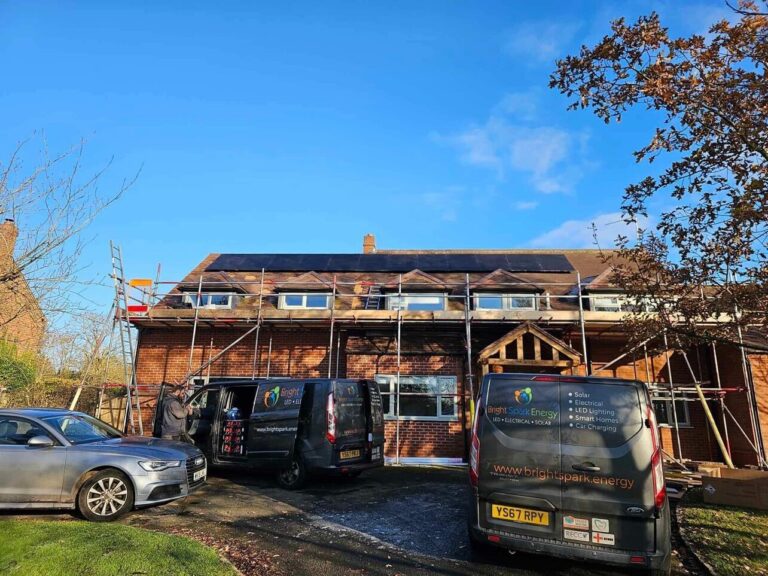
At Bright Spark Energy, we’ve successfully installed solar PV systems on everything from modern housing developments and schools to listed buildings, farmhouses, warehouses, hospitals, churches and country estates across West Sussex, East Sussex, Hampshire, Surrey, Kent and throughout the UK.
The truth is that almost every roof can accommodate solar panels.
The difference isn’t the roof…
It’s the experience of the installer.
With the right structural assessment, engineering knowledge, roofing expertise and product selection, virtually every property can benefit from renewable energy.
Every roof is different
No two roofs are constructed in exactly the same way.
A professional solar installation starts long before the first panel is lifted onto the roof.
Our design team considers:
- Roof construction and condition
- Structural loading
- Wind uplift
- Roof covering type
- Fire safety
- Cable routing
- Future maintenance
- Building Regulations
- MCS standards
- RC62 and RC67 guidance where applicable
Choosing an installer with experience in both roofing and electrical engineering can be the difference between a system that performs reliably for 30+ years and one that creates ongoing maintenance issues.
Why a structural survey matters
One of the biggest misconceptions is that solar panels are “too heavy” for older roofs.
Modern solar panels themselves are relatively lightweight, but the complete system includes:
- Aluminium mounting rails
- Roof fixings
- Panels
- Wind loading
- Snow loading
- Maintenance loading
- Ballast (on flat roofs)
Every roof responds differently to these additional loads.
For many projects – particularly:
- Older homes
- Listed buildings
- Barn conversions
- Schools
- Commercial buildings
- Flat roofs
- Agricultural buildings
– we recommend a structural survey before installation.
A structural engineer can assess:
- Rafters
- Purlins
- Roof trusses
- Timber condition
- Steelwork
- Roof deck
- Deflection
- Wind uplift resistance
This ensures your roof can safely support the system throughout its design life while providing complete peace of mind.
Clay & concrete tiled roofs
The majority of UK homes have either clay or concrete roof tiles, making them excellent candidates for solar PV.
However, quality installation is essential.
A professional installer will ensure:
- Correct roof hooks are used
- Tiles remain fully supported
- Weatherproof flashing is installed
- Underlay remains intact
- Roof loading is evenly distributed
Poor workmanship can lead to cracked tiles, leaks and expensive repairs.
Our experienced roofing teams understand both traditional and modern roof construction, ensuring the roof remains watertight throughout its lifetime.
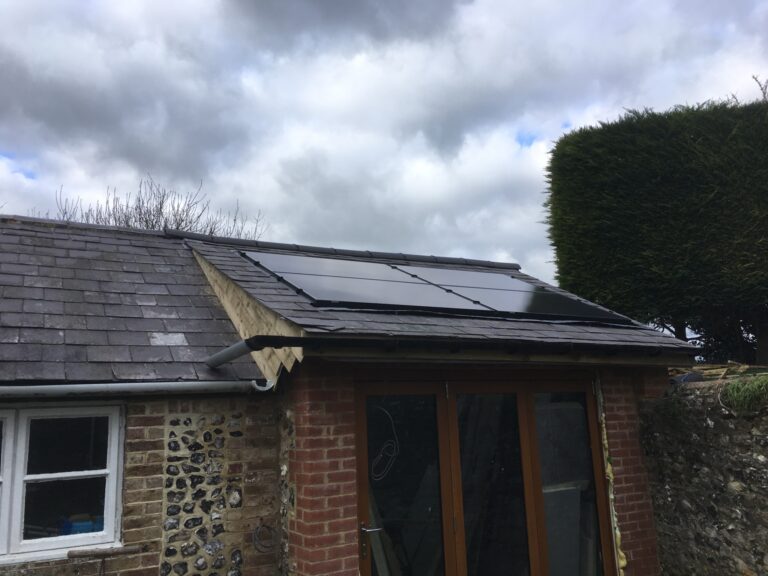
Natural slate roofs
Natural slate roofs require specialist knowledge.
Unlike concrete tiles, slate can crack easily if handled incorrectly.
We regularly install solar on:
- Welsh slate
- Delabole slate
- Spanish slate
- Heritage slate roofs
Using specialist slate mounting systems, replacement slates and traditional roofing techniques, solar can often be installed with minimal visual impact.
For listed buildings we frequently work alongside:
- Conservation Officers
- Planning Authorities
- Structural Engineers
- Heritage Roofing Specialists
In-roof solar systems
Integrated (in-roof) solar systems replace sections of the roof covering, allowing the panels to sit flush with the roofline. They are particularly popular on new-build homes, self-build projects, roof replacements and heritage renovations where aesthetics are a priority.
Benefits of in-roof solar
- Modern, architectural appearance
- Flush finish with the roof
- Ideal when replacing the roof covering
- Reduced visual impact
- Popular for heritage-sensitive developments
However, because the solar panels become part of the roof construction, installation quality, weatherproofing and fire performance become even more important.
Fire safety is more important than ever
Recent attention on photovoltaic fire safety has highlighted the importance of selecting the correct products and ensuring they are installed in accordance with current standards and best practice.
Unlike traditional on-roof systems, in-roof installations are integrated directly into the roof structure, meaning careful consideration must be given to:
- Roof ventilation
- Fire spread beneath the array
- Safe cable routing
- DC cable management
- Emergency isolation
- Maintenance access
- Compatibility with the roof construction
At Bright Spark Energy, every in-roof installation is designed with fire safety at its core.
Where appropriate we incorporate technologies such as:
- SolarEdge SafeDC™
- SolarEdge Firefighter Gateway
- Enphase microinverters, eliminating high-voltage DC across the roof
- Rapid shutdown technology
- Fire-resistant cable routing in accordance with BS 7671, MCS standards and RC62/RC67 guidance
Why BROOF(t4) certification matters
One of the most important considerations when selecting an in-roof solar system is whether it has achieved BROOF(t4) certification.
BROOF(t4) is the highest recognised European classification for the external fire performance of roof systems. It confirms that the entire roof assembly, including the solar mounting system, has been independently tested to resist the spread of fire across the roof surface.
At Bright Spark Energy we always look to specify in-roof systems that have achieved BROOF(t4) certification where appropriate.
This is particularly important for:
- New-build homes
- Schools
- Public sector buildings
- Commercial developments
- Apartment buildings
- Projects designed in accordance with RC62 recommendations
Importantly, BROOF(t4) certification applies to the tested roof system as a whole – not simply the solar panel itself. The roof covering, mounting system, underlay and panel combination must all form part of the tested construction.
Choosing a certified system provides greater reassurance for homeowners, developers, insurers and building owners alike.
Traditional on-roof solar systems
Traditional on-roof solar remains the most common installation method throughout the UK.
Rather than replacing the roof covering, panels are mounted above the tiles using aluminium rails.
Benefits include:
- Improved airflow beneath panels
- Cooler operating temperatures
- Easier maintenance
- Simpler future replacement
- Lower installation costs
- Proven long-term reliability
For many existing homes this remains the preferred solution.
What about birds?
One of the most common questions we receive is:
“Will pigeons nest beneath the panels?”
Unfortunately…
They sometimes do.
Birds can create:
- Nesting material beneath the array
- Excessive noise
- Blocked drainage
- Cable damage
- Reduced ventilation
- Bird fouling
The good news is that discreet bird protection systems can be installed around the perimeter of the array to prevent nesting while maintaining airflow and allowing future maintenance access. There’s more on this in our lessons from 550+ installations.
Flat roof solar systems
Flat roofs are ideal for solar and are commonly found on:
- Schools
- Warehouses
- Hospitals
- Offices
- Apartment blocks
- Commercial buildings
Most modern flat roof systems use aerodynamic mounting frames that require little or no penetration of the waterproof membrane.
However, structural assessment becomes particularly important because ballast used to resist wind uplift can significantly increase roof loading.
Our design team carefully assesses:
- Roof loading
- Wind uplift
- Drainage
- Waterproof membrane condition
- Future maintenance access
- Roof warranties
Metal roofs
Standing seam metal roofs are among the easiest roof types for solar.
Specialist clamps attach directly to the seams without drilling through the roof.
Benefits include:
- No roof penetrations
- Fast installation
- Excellent waterproof integrity
- Outstanding longevity
Ideal for:
- Agricultural buildings
- Warehouses
- Factories
- Commercial premises
Fibre cement & agricultural roofs
Many farms have large fibre cement roofs that are excellent candidates for solar PV.
However, every roof should be individually assessed.
Where older asbestos cement roofs are present, specialist procedures are required and safety legislation must always be followed.
Listed buildings & heritage properties
One of Bright Spark Energy’s specialist areas is renewable energy for historic buildings.
Sensitive design can include:
- All-black solar panels
- Hidden cable routes
- In-roof systems
- Ground-mounted arrays
- Battery storage within outbuildings
- Air source heat pumps positioned sympathetically
- EV charging with minimal visual impact
We regularly work alongside Conservation Officers and Local Planning Authorities to develop solutions that preserve the character of historic buildings while reducing their carbon footprint.
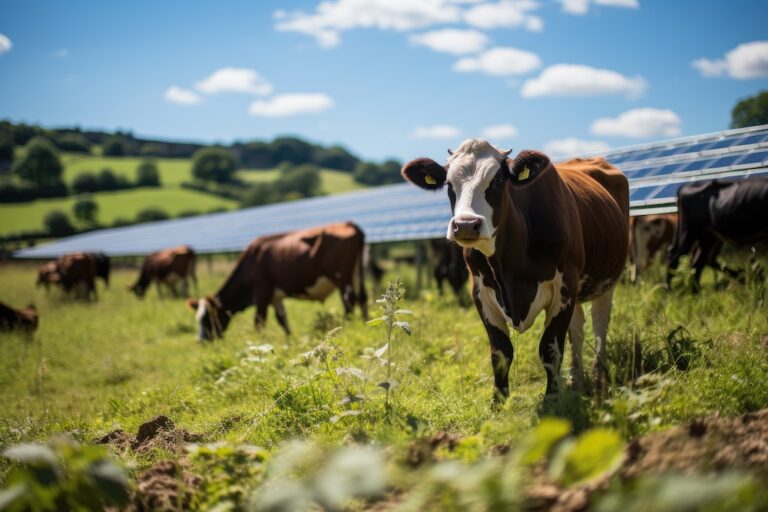
Ground mounted solar
Sometimes the roof simply isn’t the best solution.
Ground-mounted solar systems often provide:
- Better orientation
- Easier maintenance
- Larger system sizes
- Future expansion
- Minimal impact on the building itself
They are particularly popular on:
- Farms
- Country estates
- Large gardens
- Listed buildings
- Rural properties
Choosing the right technology
Every roof deserves the right technology.
Depending on the project we regularly specify:
- Sigenergy modular battery systems with scalable storage and industry-leading whole-home backup.
- Tesla Powerwall 3, providing intelligent battery storage and seamless backup power.
- SolarEdge with optimiser technology, SafeDC™ and advanced monitoring.
- Enphase microinverters, ideal for complex roofs, shaded properties and maximum fire safety.
The right equipment is every bit as important as the right mounting system.
Almost anything is possible
Over the past 15 years we’ve successfully installed renewable energy systems on:
- Schools
- Hospitals
- Care homes
- Listed buildings
- Country estates
- Barn conversions
- Warehouses
- Churches
- Modern housing developments
- Apartment buildings
- Farm buildings
- Heritage properties
Every project starts with the same question:
“What’s the best engineering solution for this building?”
– not –
“Can we fit solar panels?”
Why choose Bright Spark Energy?
We don’t simply install solar panels.
We understand:
- Structural engineering
- Roofing systems
- Fire safety
- Heritage construction
- Battery storage
- Whole-home backup
- Planning constraints
- Commercial roofing
- Long-term maintenance
Whether you own a slate cottage in the South Downs, a warehouse in Hampshire, a listed farmhouse in Sussex or a commercial property in Surrey or Kent, we’ll design a renewable energy system that complements your building while meeting the highest standards of safety and performance.
Speak to the experts
If you’ve previously been told your roof isn’t suitable for solar, we’d be delighted to offer a second opinion.
Our experienced design team carries out detailed site surveys, structural assessments where required and bespoke solar PV and battery storage designs for homes and businesses throughout West Sussex, East Sussex, Hampshire, Surrey, Kent and across the South East.
With the right expertise, almost any roof can generate clean, reliable renewable energy for decades to come.